.jpg)
SUMMER 2026 RIVER OUTLOOK
The Salmon River Never Runs Dry. Here's the Data.
Drought headlines are everywhere this summer. We pulled the actual snowpack maps, reservoir data, and 50 years of streamflow records so you can see what's really happening, and why the Salmon is different.
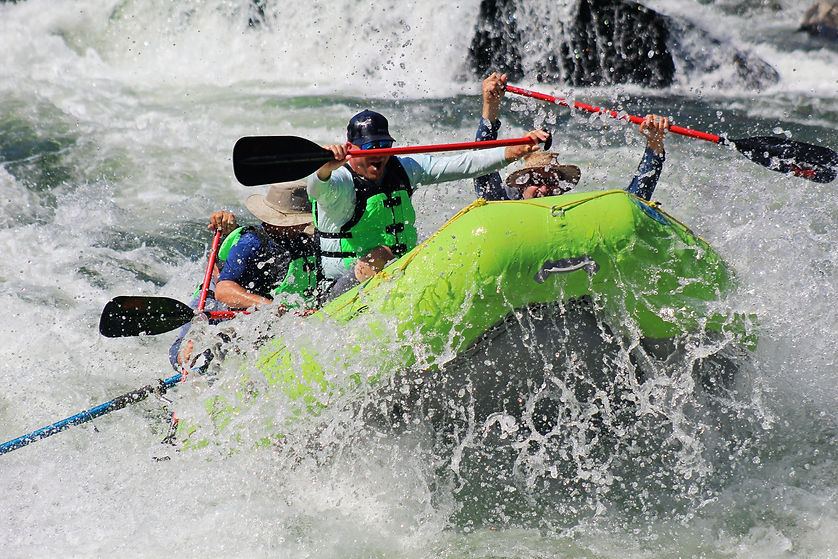
🌊 Late June 2026 Update: Big Water Is Back and Summer Just Got Better
The Salmon River is doing exactly what makes it one of the most reliable whitewater rivers in the West.
After late June rain and fresh snowfall in the high country, river flows have climbed back above 13,000 CFS and are continuing to rise. Instead of tapering off, the river received a late season boost that has extended excellent rafting conditions well beyond what we normally expect.
That means big waves, exciting whitewater, and splashy rapids will continue throughout the summer and well into the fall. The Salmon’s massive wilderness watershed and high elevation snowpack continue feeding the river long after many other Western rivers have dropped.
One immediate benefit is that our jet boat returns on multi day trips are continuing about a week longer than normal, allowing guests to ride back upstream after their adventure instead of taking the traditional shuttle.
If you’re planning a rafting trip this season, conditions couldn’t be lining up much better. Warm summer temperatures, outstanding river flows, and the most experienced guide team we’ve ever assembled are combining for one of the best seasons we’ve seen.
The outlook remains excellent for the rest of the rafting season. If you’re looking for big, fun and safe whitewater, this is the year to experience the Salmon River.
THE SHORT ANSWER
Yes, Idaho Still Has Water. You Just Need the Right River.
Drought is real in parts of the West, and some Idaho rivers are genuinely flow-sensitive. The Lochsa, Owyhee, and Bruneau can peak fast and drop off hard once spring runoff passes. Some sections of the Payette are excellent in high water but mellow out considerably once the snowpack is gone. The Middle Fork is world-class in May and June, but once peak runoff fades the wave trains give way to lower, rockier water for most of the season. Others depend on reservoir releases. The Murtaugh runs on controlled flows and only gets a short window each year.
The Salmon River basin is built differently. It drains over 14,000 square miles of central Idaho wilderness: high-elevation headwaters, cold tributaries, groundwater inputs, and one of the largest free-flowing river systems in the country. That's a lot of storage, and it doesn't disappear in July. Some rivers get their reliability a different way, from dams, reservoirs, and hydropower demand. The Hagerman section of the Snake runs consistently at 5,000 CFS all summer because of exactly that, making it one of the most predictable warm-water trips in the state regardless of snowpack.
It's worth being honest about what warm temperatures have done. Many lower-elevation basins across Idaho are sitting well below normal snowpack this year. Rivers that depend on a short burst of spring runoff, like the Owyhee, Bruneau, and southern Idaho tributaries, are having a lean year. High temperatures burned through the low-country snow fast.
The Salmon is different because its snowpack lives at altitude. The high peaks are still holding significant snow, and that's what feeds the river through July and August.
At its late-summer low near Riggins, the Salmon still runs around 3,000 CFS, more than 22,000 gallons of water moving every second.
That's still a real river with real waves, still plenty to raft, and still one of the best whitewater experiences in Idaho even in a dry year. The difference between the Salmon and more runoff-dependent rivers is structural, not just seasonal luck.
WHY IT'S RELIABLE
Five Reasons the Salmon Basin Holds Water All Summer
01 High-elevation snowpack that melts slowly
The Salmon basin averages well above 6,000 feet in elevation. Snow at that altitude melts gradually into the summer, not all at once during a warm week in April. It acts like a slow-release reservoir built into the mountains.
02 One of the largest free-flowing drainage basins in the lower 48
The Salmon River drains a massive area. More drainage area means more tributaries, more groundwater contribution, and more total water in the system. Small rivers peak and crash. Large basins sustain flows.
03 Significant groundwater and cold spring inputs
Much of the Salmon basin is underlain by fractured volcanic rock that stores and slowly releases water. Cold springs throughout the watershed keep tributaries flowing even in late summer when surface runoff slows.
04 No major diversions or dams on the main stem
The main Salmon runs free. There's no dam capturing peak flows for irrigation that then leaves the river low in summer. What falls as snow in the mountains makes it to the river.
05 Historically at or above median precipitation this year
In Summer 2026, the Salmon basin SNOTEL network is reporting 100% of median water-year precipitation, with some eastern sub-basins well above that. The snowpack picture is solid heading into runoff season.
WHAT THE DATA SHOWS
The Numbers for Summer 2026
We pulled current data from USDA NRCS SNOTEL, USGS stream gauges, Bureau of Reclamation reservoir reports, and the NOAA Climate Prediction Center. Here's what they say.
WHAT IT MEANS FOR YOUR TRIP
Which Rivers Are the Strongest Bets for Summer 2026
Not every Idaho river is equally predictable. Here's how the major sections stack up based on this year's data.
BOTTOM LINE
How to Read Drought Headlines as a Rafter
When you see a drought map, the real question is: where exactly is the drought, and what does it mean for my river?
A drought designation in southern Idaho affects the Owyhee, Bruneau, and Snake River headwaters much more than it affects the Salmon, which pulls from a different, larger, higher-elevation basin entirely.
Rafting doesn't need peak flows. It needs enough water to float a raft and create waves. The Salmon does that reliably from Memorial Day through Labor Day, most years, because of the structural reasons above, not because we got lucky with rain in any given week.
If you're planning a summer trip and you're not sure which section fits your group, reach out. We guide thousands of guests each season across multiple rivers and can usually point you to the right trip in one conversation.
Not Sure Which Trip Fits?
Tell us your group size, kids' ages, budget, and how wild you want it, and we'll point you in the right direction.